A CT scan of iPhone Duo offers a closer look at the gears, springs, and cams that let Apple's first foldable stay open at different angles. HTX Studio used the scan to reconstruct the hinge and explain how its moving parts work together.
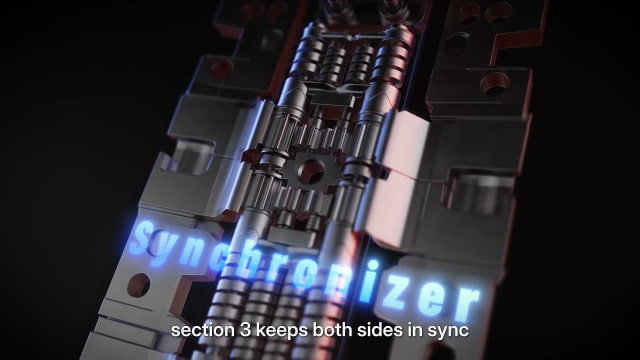
The team could not disassemble its review unit, so it combined the CT images with official materials to build a 3D model. The result is a non-destructive look inside the phone rather than a conventional teardown.
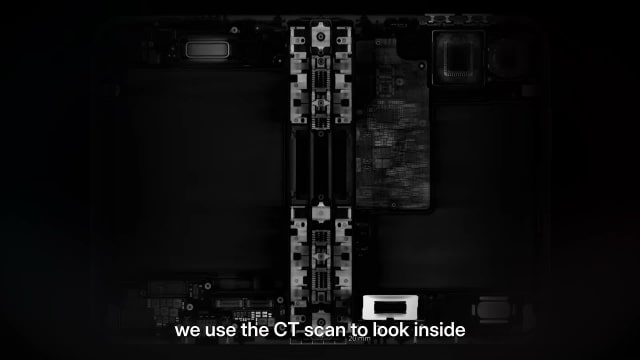
The analysis divides the hinge into six functional sections, with mechanisms mirrored at the top and bottom. Pivot points connect each half of the phone to a central shaft, while rows of gears transfer rotation from one side to the other so both halves turn by the same angle. A space in the center lets flex cables connect the electronics on either side.
Keeping the movement synchronized is only part of the job. Springs press against shaped cams to resist rotation when the phone is open. As the display folds, the cams compress the springs, creating enough friction to support the phone's weight instead of letting it collapse under its own load.

In physical testing, HTX found the phone could hold an angle between 15 and 145 degrees. Magnets pull the two halves together near the closed position, while the hinge leaves room for the display to form a teardrop-shaped curve inside the fold. The team measured that space at about 3.85 millimeters across at its widest point.
The video also examines the inner screen's nano-textured surface, which scatters reflections to make the crease less noticeable. In a separate scratch test, a rig pressed pencils graded from 6B to 8H against the display with a constant 100-gram load. A 6H pencil left faint marks visible under bright light but not detectable by touch; at 8H, the scratches were more obvious and could be felt.
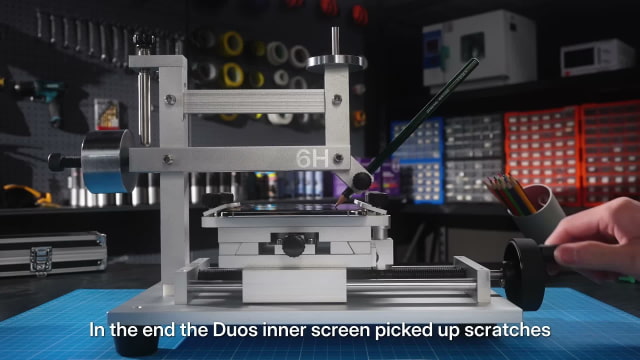
Those are pencil-hardness grades, not Mohs ratings. Apple has separately confirmed that the folding display's cover layer can be replaced if it wears over time.
The hardware analysis follows the first iPhone Duo reviews ahead of the October 23 launch. Watch HTX Studio's full review below, with the CT scan and hinge explanation beginning around the five-minute mark.